
Slow down!
On easy days, you’re using mostly slow-twitch muscle fibres. They have a higher density of mitochondria, high levels of aerobic enzymes and greater capillary density than fast-twitch fibres, which are more involved in higher intensity training.
Slowing down and incorporating easy miles into your training increases mitochondria and capillaries and blood flow to those muscles, so they’re better able to utilise oxygen. Without that, you can’t do the intense runs!
All runners, and especially beginners and those coming back from injury, benefit from the cardio-vascular and muscular-structural development that easy running promotes. The base fitness a runner puts down through a preponderance of easy runs enables the athlete to safely progress to other types of training.
Seasoned runners also need easy days to maintain their hard-earned aerobic fitness and to make continual gains in economy. Of course, competitive runners are interested in moving efficiently at race paces – the primary reason for training at a variety of intensities – in addition to running easy. But even slow running allows for gains in efficiency of movement.
More importantly, slow running allows you to recover properly from hard days.
What pace should you be doing your easy runs at?
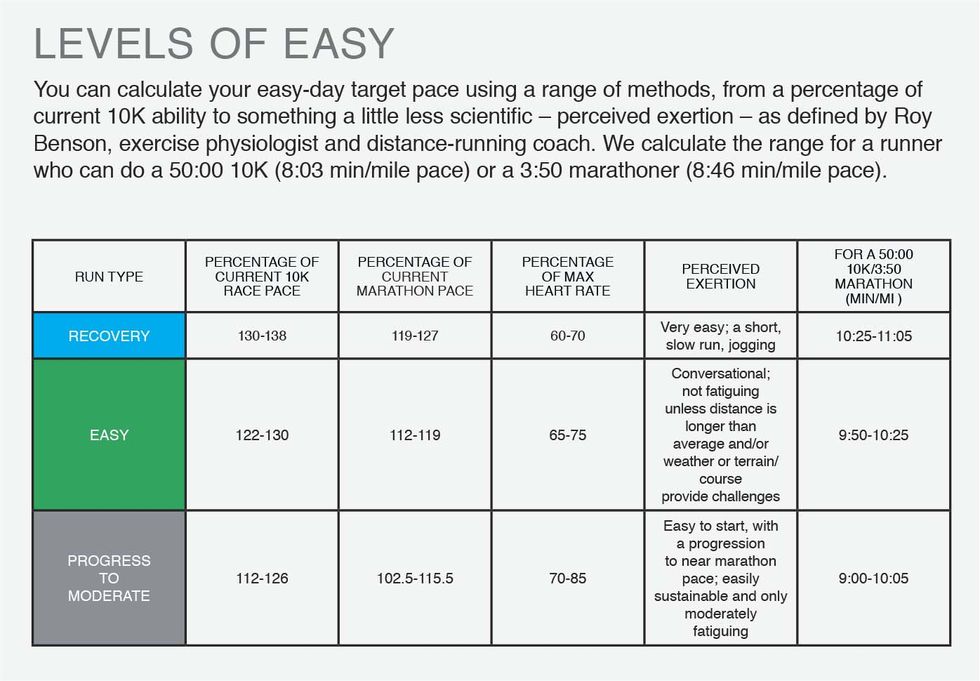

For the full article visit: https://www.runnersworld.com/uk/training/beginners/a26514237/running-pacing-easy-miles/